Blueprint manual
A written manual you can keep coming back to instead of trying to remember everything from memory.
Stop "vibe coding" and start engineering. The definitive blueprint to lead the models without losing your technical edge.
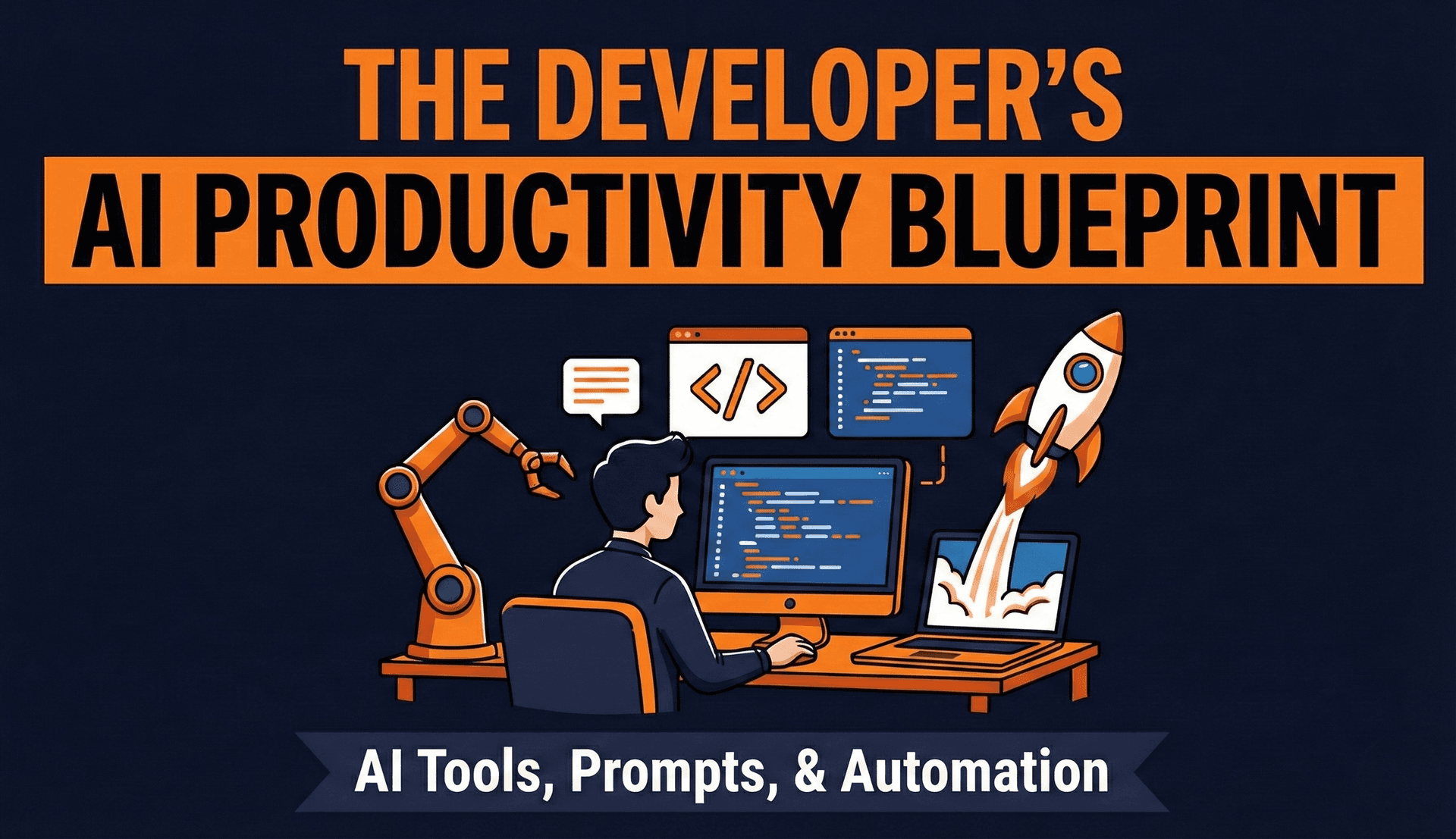
8 modules focused on workflow, judgment, security, and practical leverage.
AI is no longer a trend. It is infrastructure.
Five years ago, AI coding tools were experimental. Today, they are becoming part of the standard environment. Ignoring them does not preserve your skills. It just slows you down.
The opposite mistake is using them blindly. That can make you faster in the short term, but it also makes it easy to stop thinking clearly, stop reviewing properly, and slowly lose the judgment that makes you valuable in the first place.
This blueprint is the third path: AI as a multiplier, not a dependency. The point is not to become an AI operator. The point is to stay an engineer while the tools change around you.
Waitlist
Join the list if you want first access when enrollment opens.
Get launch updates and early access.
The real goal here is not learning how to use AI tools. It is learning how to remain a strong engineer in a world where AI is becoming normal.
AI integrated into your daily workflow
Use AI across planning, coding, debugging, review, and documentation without turning your workflow upside down.
Evaluate AI-generated code with confidence
Learn how to catch silent failures, weak code, and bad assumptions before they make it into production.
Use AI without losing your engineering skills
Build habits that keep your judgment, debugging instincts, and code-reading ability from getting lazy.
This is not one of those courses that gives you vague ideas and leaves you to figure out the rest. You leave with systems, templates, and frameworks you can actually use.
A written manual you can keep coming back to instead of trying to remember everything from memory.
A clear way to choose the right mix of autocomplete, chat, editor, and agent tools without wasting money.
Reusable prompts for debugging, generation, refactoring, explanation, and structured output.
Context and rules files so AI works with your codebase instead of fighting it.
A practical checklist for reviewing AI output before it reaches production.
A simple system to stop your reasoning, code reading, and debugging ability from getting rusty.
A practical developer-focused AI agent workflow with clear scope, boundaries, and review steps.
The course comes with written material, templates, and working frameworks so you are not relying on memory after each lesson.
Tibo Denz
After building a six-figure consulting business while living in Thailand, my focus is now on helping developers build leverage through better tools, workflows, and technical independence.
The material in this course is based on real engineering workflows, not theoretical AI hype.
Curriculum
Each module covers one part of the workflow so that, by the end, you have a complete system instead of a random collection of AI tips.
Module 01
Build the mental model that tells you which tool fits which job.
Choose the right stack for autocomplete, chat, editors, and agents without paying for a bunch of tools you do not need.
Module 02
Write prompts that produce usable output instead of vague AI sludge.
Prompt with more structure, less guessing, and fewer rounds of back-and-forth.
Module 03
Make planning the first step and coding the second.
Use a plan-then-code workflow so AI helps you move faster without taking over the task.
Module 04
Catch the most dangerous ways AI code fails before it reaches production.
Review AI output with a practical lens for correctness, maintainability, security, and the hidden ways AI code tends to fail.
Module 05
Learn faster without learning less.
Use AI as a learning assistant instead of a shortcut that makes you feel productive while learning less.
Module 06
Figure out which skills you are quietly offloading to AI.
Use a personal skill audit plus Practice Mode vs Build Mode to protect your fundamentals while still getting real leverage from AI.
Module 07
Use AI tools without exposing your code, data, or organization.
Use AI safely with clear rules for sanitization, sensitive data, and which tools are appropriate for what.
Module 08
Move from isolated prompts to a real agent workflow.
Design a practical three-agent workflow that automates repetitive work without giving away the parts that still need your judgment.
Hands-on outcome
By the end, you will have a practical AI workflow for daily development and a clear path to your first developer-focused agent, not just a bunch of notes you forget two weeks later.
Waitlist
Join the waitlist if you want first access when the course opens.
Get launch updates and early access.
It is for working developers who want to use AI in real projects without getting sloppy or dependent on it.
It is practical. The whole thing is built around repeatable workflows, checklists, templates, and concrete patterns you can actually use.
Some tools will change, obviously. But the course is built around workflows, evaluation, and judgment, so the core ideas do not disappear every time a new tool shows up.
Yes. A full module is dedicated to skill maintenance, and the whole course is built around using AI as leverage instead of turning it into a crutch.
Yes. You finish with a real workflow, reusable prompts and review systems, and a practical first agent design you can adapt to your own work.
By the end of this blueprint you will have:
Waitlist
If this is the kind of practical AI workflow you want, join the waitlist.
Get launch updates and early access.